Lessons from "The Richest Man in Babylon"
November 2025
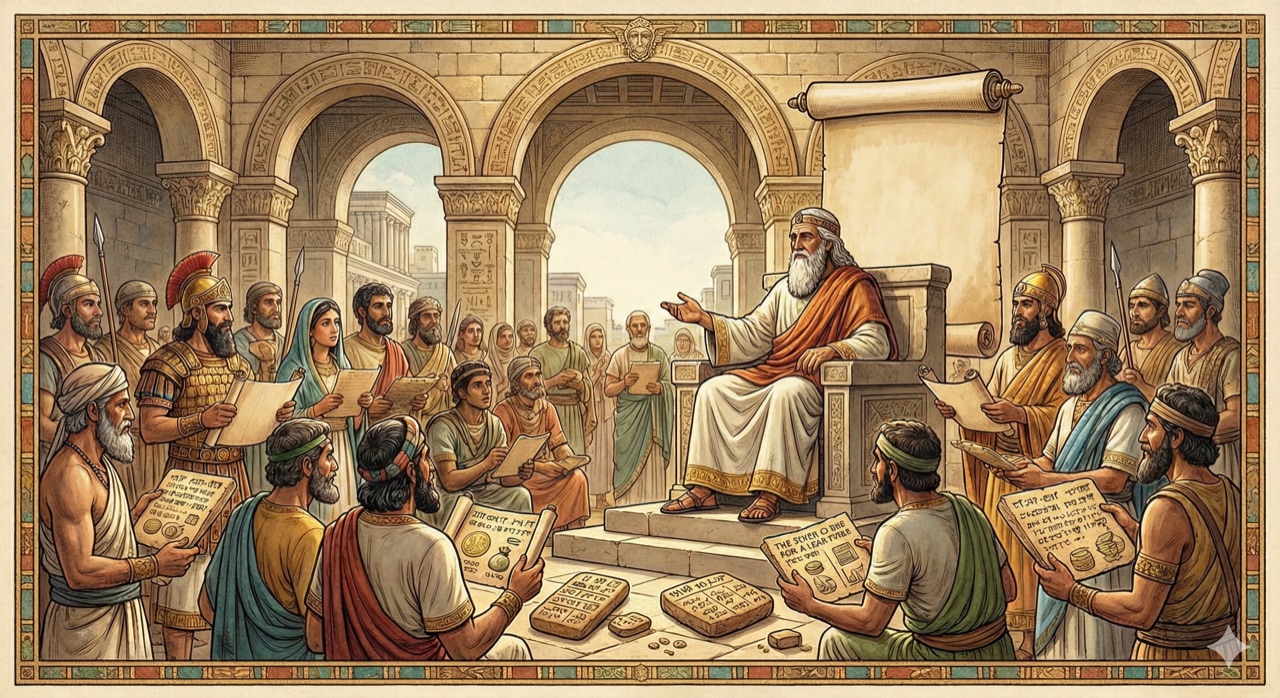
You've probably heard the typical phrase: "I don't have enough money to make ends meet." It is said by family, friends, people in the news and it is even the base argument for many bills with proposals such as: lowering taxes, raising the minimum wage, providing subsidies, etc. But, let's be honest and look at our own steps: when you have managed to obtain a better income, do you really end the month with financial comfort?
Maybe the first months yes. But after a short time, we return to the same problem: it is not enough, we do not save and, even worse, we end up with larger debts.
my breaking point
A few years ago, that was my constant reality. I was striving to earn more, but I didn't understand where my money was going. So I made a decision: not to expect different results by doing the same thing.
I adopted two essential habits that, honestly, took me months to incorporate:
- The record: I created a spreadsheet to write down every peso that came out of my pocket and understand the "why."
- The budget: I planned my monthly expenses so as not to exceed them, including the savings that I longed for.
These two simple actions saved my finances. Had I not started on time, the year I was unemployed would have been devastating, especially considering that both of my children have already entered college and our living costs have increased.
Although these habits are my foundation, I felt like I had stagnated and taken on avoidable debt. In my search for answers, I struck gold. I found an easy and motivational reading book: "The Richest Man in Babylon" by George S. Clason.
Here I share the key teachings that I am going to apply in my life.
The secret we all seek (The Story of Bansir)
The book starts with Bansir, a car maker who, despite doing beautiful jobs for the rich, doesn't even have enough to eat. He wonders: What secret do the rich have that I don't?
His friend, who is also broke, asks him to borrow money, which leads them to a painful reflection: they both had the same opportunities since they were children, but Arkad, an old friend, became the richest man in the city while they barely survive. They decide to go ask him his secret.
Reflection: If you feel like you are doing it wrong, you are not alone. It's more common than you think (it happened to me). The important thing is to want to change.
The 10% rule and discipline
Arkad reveals his secret to them: "A part of everything you earn is yours to keep." Specifically, you should save 10% of everything you earn and learn to live with the other 90%.
But here I want to stop at something key: discipline. Arkad uses a simple example: throwing a stone into the river every day. If you forget one day, don't throw away two the next day; come back and throw it away.
I didn't understand the difference, but now I see it clearly: it's about forming the habit. Before I said "I'll do it tomorrow", but tomorrow I was tired or busy. Since I schedule and complete my activities without excuses (whether I'm sleepy or hungry), I not only achieve my goals, but I have improved my organization.
The 7 ways to fill an empty bag
The book details practical steps that resonate strongly with what we call modern financial education today:
- Start filling the bag: Start filling the bag: Save 10% of your income. Pay yourself first. Control your expenses: Make a budget with your mandatory expenses and stick to 90% of your income. Distractions should not touch your savings. Make your money grow: Once you have savings, invest them. Make them generate profitability (compound interest). Protect your treasures: Do not trust your money to inexperienced people or get carried away by emotions or promises of quick profits. Make your property an investment: owning your own home reduces long-term expenses. (Note to self: although some investors debate this, from my own experience I know that the peace of mind of not paying rent when you retire is priceless).
- Eontrola tus gastos: Haz un presupuesto con tus gastos obligatorios y ajústate al 90% de tus ingresos. Las distracciones no deben tocar tu ahorro.
- Haz que tu dinero crezca: Una vez que tengas ahorros, inviértelos. Haz que generen rentabilidad (interés compuesto).
- Protege tus tesoros: No confíes tu dinero a inexpertos ni te dejes llevar por emociones o promesas de ganancias rápidas.
- Haz que tu propiedad sea una inversión: ener casa propia reduce gastos a largo plazo. (Nota personal: aunque algunos inversionistas debaten esto, por experiencia propia sé que la tranquilidad de no pagar arriendo al jubilar es impagable).
- Ensure future income: Plan for your old age and protect your family.
- Increase your ability to acquire goods: Educate yourself and become more skilled at your job.
The 5 laws of gold
The book summarizes how money works with these laws:
- Gold goes to those who reserve 10% of their profits.
- Gold works profitably for the wise possessor (compound interest).
- Gold is protected under the advice of wise men.
- Gold escapes from those who invest in businesses that are neither known nor approved by those who know gold.
- Gold flees from the man who seeks impossible profits, follows the advice of fraudsters or investors based solely on his inexperience or romantic intentions.
The gold lender
This story tells the case of a man who made a lot of money and suddenly found himself surrounded by people asking for loans, including his sister for her husband's business.
Confused, he goes to a wise lender. This advises you to take care of your money (based on the third law and fourth way). He suggests being honest: if he lent the money for a business that his sister's husband didn't know about, the risk of losing everything was very high.
The Lesson: Personally, I learned about lending money the hard way. As the book says: "Prevention is better than cure." If you are going to lend, let it be an amount that you are willing to lose, because many times it does not come back.
Free man or slave? (The camel dealer)
This was the story I liked the most. It is about Dabasir, who due to debts and mismanagement ended up running away, became a thief and finally became a slave.
He hit rock bottom until a woman asked him the big question: Do you have the soul of a slave or a free man? Dabasir understood that a free man takes responsibility. He escaped, almost died in the desert, but his determination took him back to Babylon. He faced his creditors (some did not believe him, but his wife did) and little by little he paid everything, managing to amass a fortune.
The lesson: When you are determined, you find the means.
The luckiest man in Babylon
Here we meet Prince Sharru Nada and the grandson of an old friend. The grandson is a lazy young man who believes that money comes easy, until Sharru tells him her story.
Sharru was a slave alongside this young man's grandfather. They both worked hard, doing extra jobs making a profit for themselves and their masters. Grandfather managed to buy his freedom first. Years later, Sharru (still a slave and in the worst conditions) was rescued by that same grandfather, who never forgot the value of his advice in achieving his freedom.
The young man understood that his grandfather's "luck" and wealth were not magical, but the result of effort and work.
Conclusion: Our responsibility
I want to close with the first line of the book's preface: “Our prosperity as a nation depends on the financial prosperity of each of us as an individual.”
This hits the nail on the head, especially ahead of the November 2025 elections. No matter how many laws are approved, if we do not educate ourselves financially, we will remain the same. It is time to demand financial education from those who want to lead our nation, but above all, to educate ourselves.
I hope this summary motivates you to seek your freedom, just like Dabasir and Sharru did.
Thanks for reading.